Blue smoke from exhaust usually points to an engine burning oil. For Burlington drivers, the useful next question is how that oil is getting into the combustion process. The smoke alone cannot tell you which part needs replacement.
A puff at startup, smoke during acceleration, and smoke that continues after warmup give a technician different conditions to investigate. Pairing those observations with oil-level records and mechanical testing helps separate a correctable oil-level or ventilation problem from internal engine wear.
What does the smoke pattern tell you?
Blue exhaust smoke on startup
Startup smoke can suggest valve-guide leakage. MOTOR describes this diagnostic clue.
Record whether the puff happens only after the vehicle has sat overnight or also on a warm restart. Note whether it clears or continues. “A puff after sitting, then no visible smoke” is a more useful description than “it smokes sometimes.” That gives the technician a specific condition to reproduce.
Smoke during acceleration
Tell the technician whether smoke appears as you press the accelerator, whether the engine is already warm, and whether it follows a period of idling.
That pattern gives a reason to investigate oil entry while the engine is working, including ring and cylinder condition. It does not prove the piston rings have failed. Motorservice identifies stuck rings and cylinder-bore problems as possible oil-consumption mechanisms; excessive oil entering through crankcase ventilation is another route to check. Motorservice’s oil-consumption guide explains these mechanisms.
Smoke that continues after warmup
Continuous smoke suggests the oil entry may be ongoing. Record whether it stays similar at idle and during ordinary driving or changes with acceleration.
These patterns can overlap. A description of when smoke starts and stops helps direct testing, but it is not a reliable shortcut to a repair recommendation.
What oil-level observations should you record?
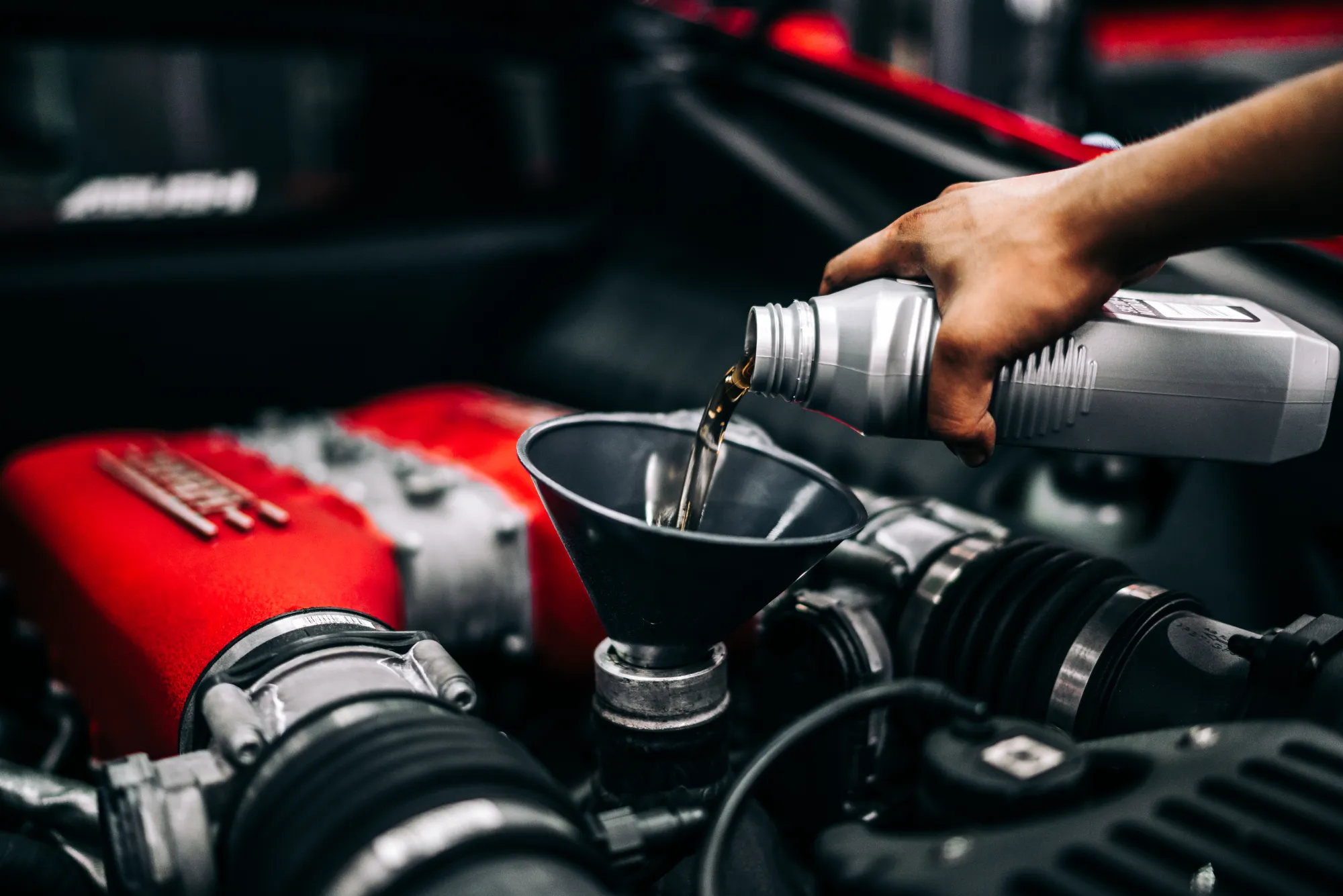
Use your vehicle’s owner’s manual for the checking procedure, including the required engine temperature and waiting time. On vehicles with a dipstick, consistent checks generally involve level ground, the engine switched off, and wiping and reinserting the dipstick before reading it. Add only the specified oil when needed, and do not exceed the maximum mark. Ford’s oil-check instructions illustrate why the checking procedure matters; use the instructions for your own vehicle.
Keep a simple record:
- Date and odometer reading: Include the mileage at each check.
- Level before adding oil: Record where it falls relative to the indicated range.
- Oil added: Note the amount, viscosity, and specification.
- Smoke timing: Record startup, warm restart, idle, acceleration, or continuous smoke.
- Recent service: Note when the oil was changed or topped up and when you first noticed smoke.
- Other observations: Include visible oil spots, warning lights, or changes in how the engine runs.
A falling oil level does not establish where the oil went. Oil escaping externally and oil consumed internally require different investigation. An above-maximum reading matters, too: overfilling can send excess oil through the crankcase ventilation route into combustion.
Bring the oil container information or service receipt if you are unsure what was added. Mark estimates as estimates. If you did not check the level before a top-up, say so; the technician can establish a starting point instead of treating an uncertain amount as a measured loss.
For example, a useful note might read: “Checked before adding oil; level near minimum; recorded mileage and amount added; smoke appeared on the next warm restart.” This is an observation record, not a diagnosis. Keep subsequent entries in the same format so changes are easier to compare.
Ask how often to check the level while the problem is being assessed. Do not deliberately let it run low to demonstrate consumption.
How does testing guide the repair recommendation?
Performance Tire & Auto Service lists engine repair and diagnostics among its services. For a blue-smoke complaint, the diagnostic question is where the oil is entering and what evidence supports that finding.
Depending on the engine and symptoms, a technician may:
- Confirm the smoke and oil level. Reproduce the reported condition and look for external leakage.
- Inspect ventilation and intake components. Check the positive crankcase ventilation, or PCV, system and investigate excess oil in intake passages. A turbocharged engine may also need its turbocharger inspected.
- Check cylinder condition when indicated. Compression and cylinder-leakage tests provide measurements to compare with that engine’s service specifications.
- Match the recommendation to the findings. Correct an established oil-level or ventilation fault, or investigate internal damage when the measurements warrant it.
For example, a GM diagnostic bulletin for a specific Cruze engine calls for oil-path inspections and cylinder measurements before deciding on internal repairs. Its instructions are model-specific, but they illustrate why smoke alone is insufficient evidence for engine replacement.
Normal compression doesn’t exclude oil consumption. MOTOR notes this limitation.
The inspection findings and oil-use record still matter alongside test readings.
What should the test results change?
Ask to see the cylinder results and the manufacturer’s comparison criteria if internal repairs are proposed. A reading outside specification should lead to an explanation of what needs further inspection. It should not become a claim that every smoking engine needs the same repair.
The GM example shows the distinction: abnormal compression or cylinder leakage leads to inspection of pistons and rings, while cylinder-wall or block damage changes the engine-replacement decision. That sequence belongs to that engine’s procedure. Your vehicle needs a recommendation based on its own findings.
Likewise, finding excess oil in an intake passage should prompt investigation of its source. Ask whether the inspection established a ventilation fault, an oil-level problem, or another route requiring further testing. An oil stain by itself is less useful than an explanation connecting the finding to the smoke you reported.
Before authorizing work, ask what the proposed repair addresses and what follow-up observation or measurement will show whether it worked.
An emissions test serves a different purpose from tracing the mechanical source of burning oil. When reviewing a repair recommendation, ask which finding identifies the oil-entry route, what remains uncertain, and how the technician will verify that the repair reduced the smoke or oil consumption.